What are the different kinds of book binding?
Here at French Touch Photography, we take your wedding album’s durability seriously. We researched a photo book that will last for decades, or even centuries, if conserved properly.
That’s why we have reviewed different kinds of book bindings which are a key element in the photo books’ sturdiness.
When preparing this article, we discovered a large variety of bindings. Some techniques are a real piece of art, handmade by talented craftsmen, that really enhance the book’s aesthetic.
And if today books are pretty affordable, it reminds us how, in medieval times, books were extremely precious and reserved for rich people!
Before reviewing the different kinds of bindings, let’s review the definition of a few terms.
Table of Contents
Book and Binding terminology
Signature
It’s a set of sheet paper folded together. Folded, each sheet represents 4 pages. A signature is a set of pages whose number is a multiple of 4.
Book Block
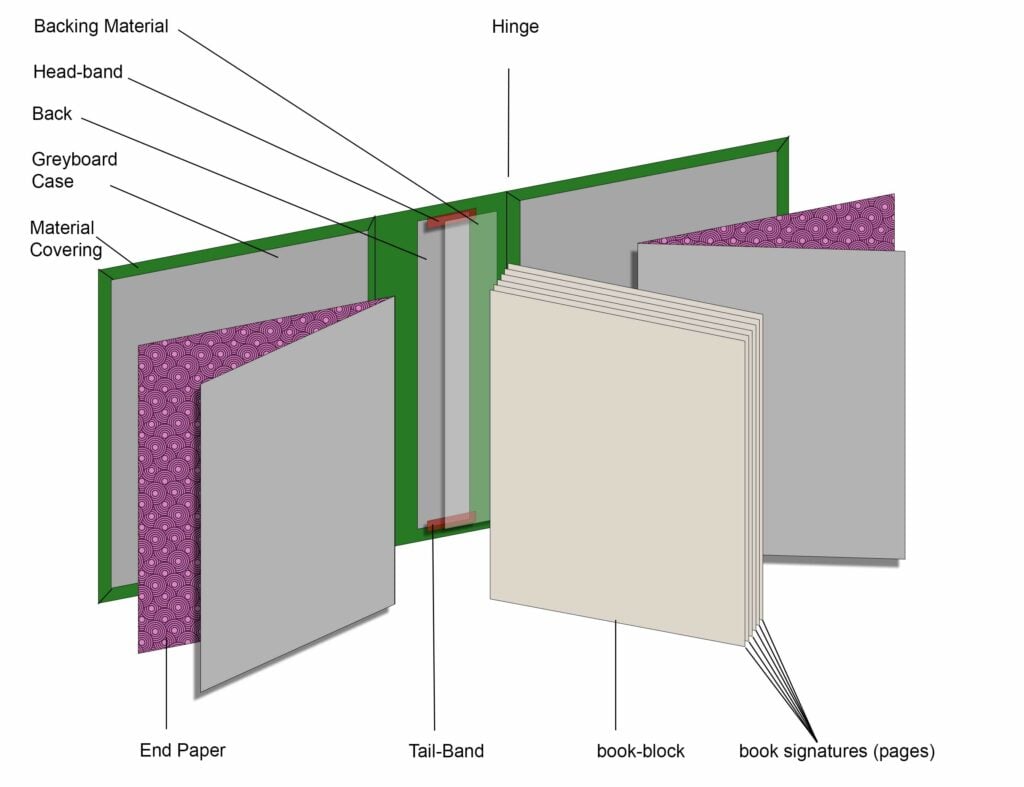
Book blocks (or text blocks) is a set of signatures bound together. They can be bound with staples, wire, or glue. It’s basically the pages that compose the content of the book opposed to the cover.
Endpapers
The endpapers (or endsheets) are 2 sheets of paper which hold the book block and the cover together, which make them an important part of the binding. They should be resistant enough to hold the weight of the block paper. They can be made with the same paper as the book block, or a thicker one if needed.
The endpapers can be plain, white, black, or any colors, with patterns or other illustrations to enhance the visual aspect of the book.
Hinge
The hinge of a book (or joint, or binding) is the part of the book where the cover is attached to the spine. It needs to be flexible and tear resistant to hold the different parts of the cover together.
Cost-effective binding
Saddle Stitch Book Printing
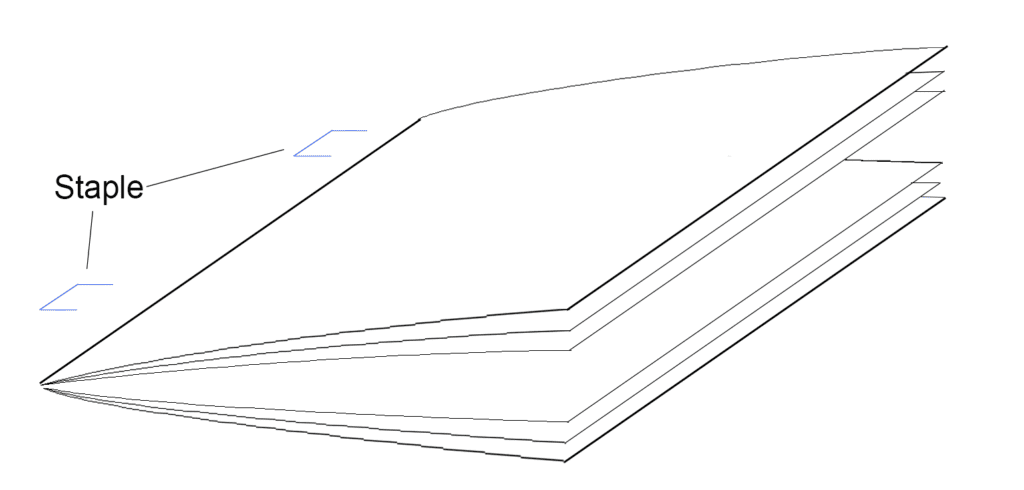
This is the most common, not to say basic form of book binding. It’s composed of a single signature (set of sheets folded in the middle), and 2 to 3 staples stapled in the fold line.
The same paper can be used for the cover (called self-cover), or a thicker cardboard one.
Staples can hold a limited number of pages, depending on the thickness of the paper involved.
Given the page is folded, each sheet is actually composing 4 pages. Therefore the number of pages is always a multiple of 4.
Finally, the last step of the process is to trim the edge to have a clean result. It’s extremely cost-effective, making it perfect for a cheap booklet. Most copy shops can do it.
Side Staple Binding
Individual sheets of paper are stacked. You can use different kinds of paper for creative purposes.
The cover can be made in the same paper or a thick board.
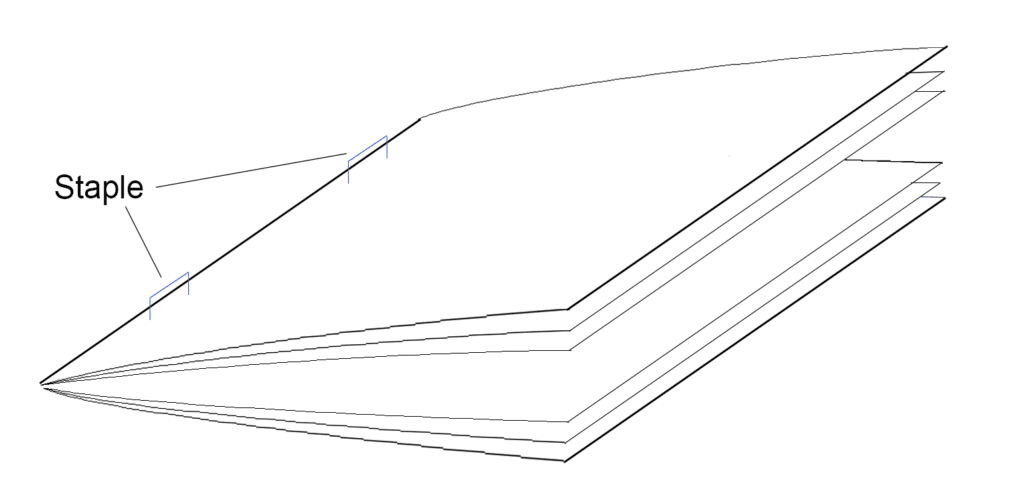
Staples are stapled from the side of the cover, alongside the spine, before the hinge. That would prevent the hinge of the book from opening fully, and therefore, the pages can’t lay flat.
Spiral, Coil, Wire-O Bound Book Printing
All three kinds of binding use the same concept.
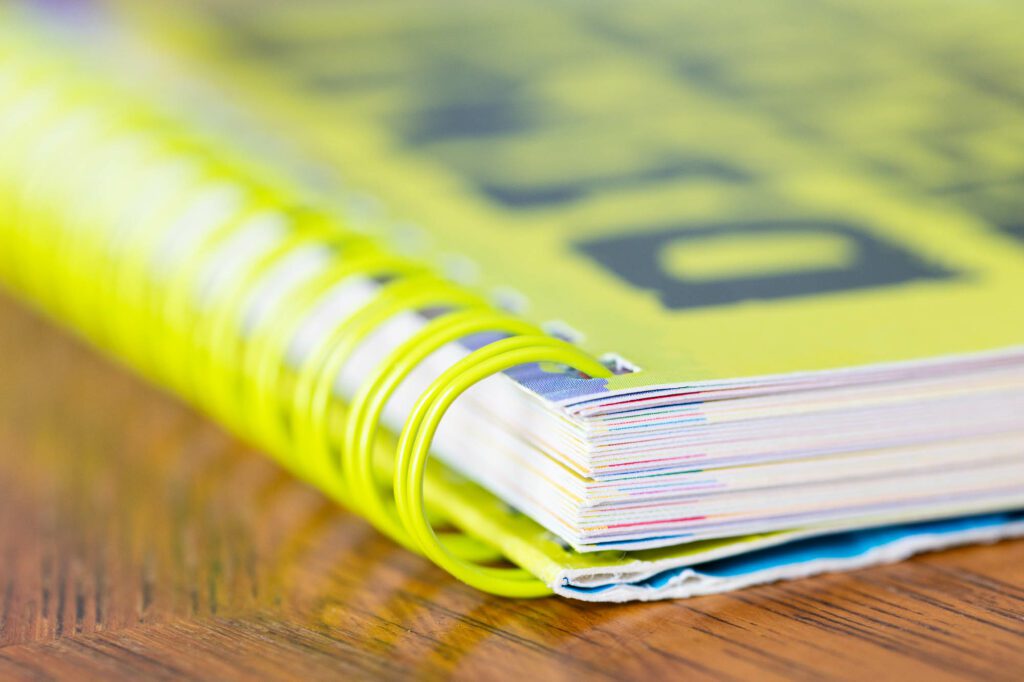
All the sheets are stacked (not folded this time), and holes are punched along the left edge. A plastic or metallic coil is inserted holding the pages together.
Different kinds of paper can be stacked, which is great for creativity. The cover can be made with the same paper or a different material, but it will not wrap the book, which means there is no spine. Each sheet represents two pages and therefore there is no limitation on the final number of pages, except by the coil. Different sizes and shapes of coils exist allowing more or fewer pages.
Hole-punched books can open, lay flat and even open 360°! But the coil, in the middle, remains visible, preventing the print of an image on 2 consecutive pages.
Sewing Bindings
Sewn binding has existed for a long time. Therefore there is a ton of variety. We will just go through the most famous.
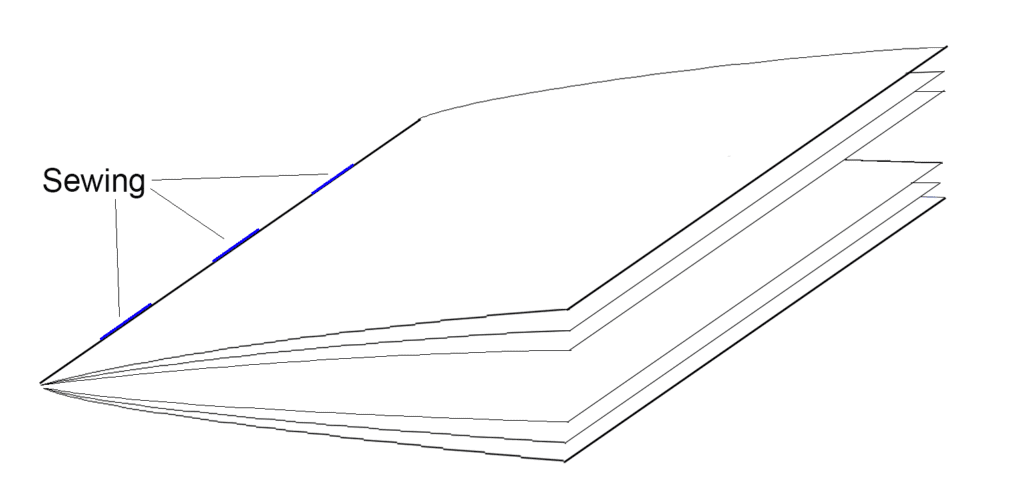
The Pamphlet Stitch
The concept is quite similar to saddle stitch binding except that a string is used instead of staples.
Sheets are folded in two to create 4 pages, and then piled together to create a signature. Holes are pierced on the spine of the signature and the cover. And then, thread is sewn through the holes to hold the cover and signature together.
Color and the threads can be a source of customization.
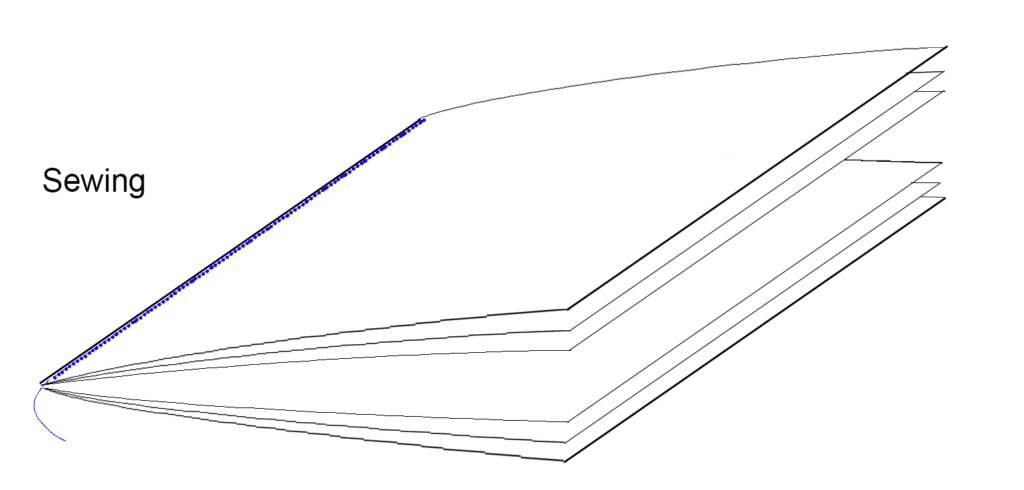
Singer sewn binding
Also called thread stitched binding, it’s a variation of the pamphlet stitch. Instead of a few holes.
The spine of the book literally goes through an industrial sewing machine that stitches the book cover and pages together!
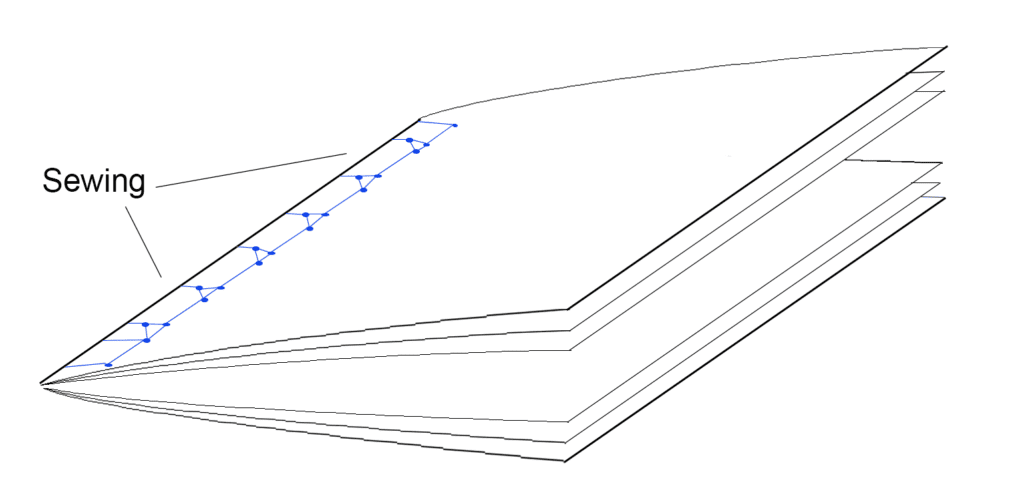
Japanese Binding
Japanese Binding (or Stab), reminds in a way the art of bondage (famous art in Japan) applied to books.
It uses the same idea as the side staple: attached to the side of the cover, instead of by the spine.
Holes are made alongside the spine of the book, before the hinge. Then thread is sewn through the holes and remains visible over the cover. There are multiple patterns possible: Tortoise-shell binding, Noble binding, Hemp-leaf binding, 4-hole binding.
Such bindings do not allow the cover to open completely, nor the pages to lay flat.
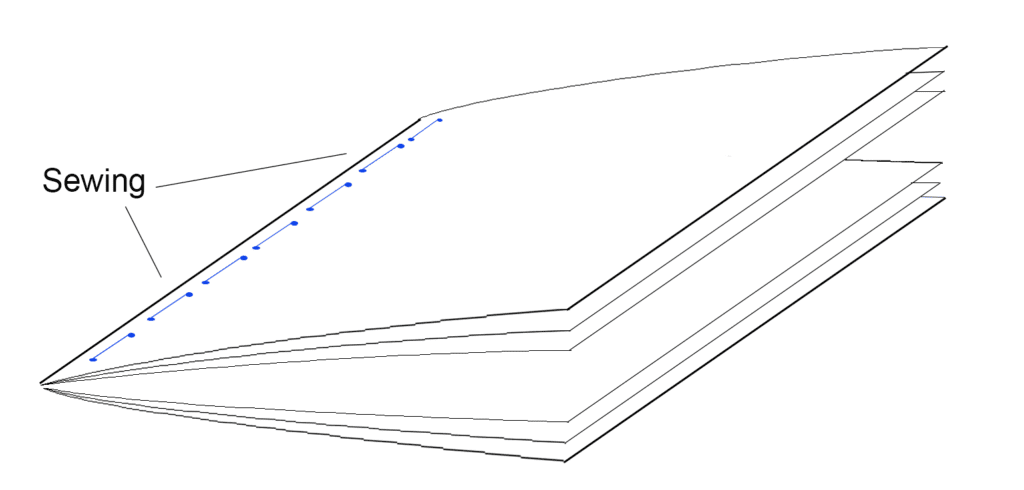
Side Sewn
Modern version of the Japanese binding without the artistic dimension.
Pages are gathered together and stitched together along the spine. It’s not possible for the pages to lay flat creating a deep gutter.
A hard cover is then applied to the book hiding the stitches.
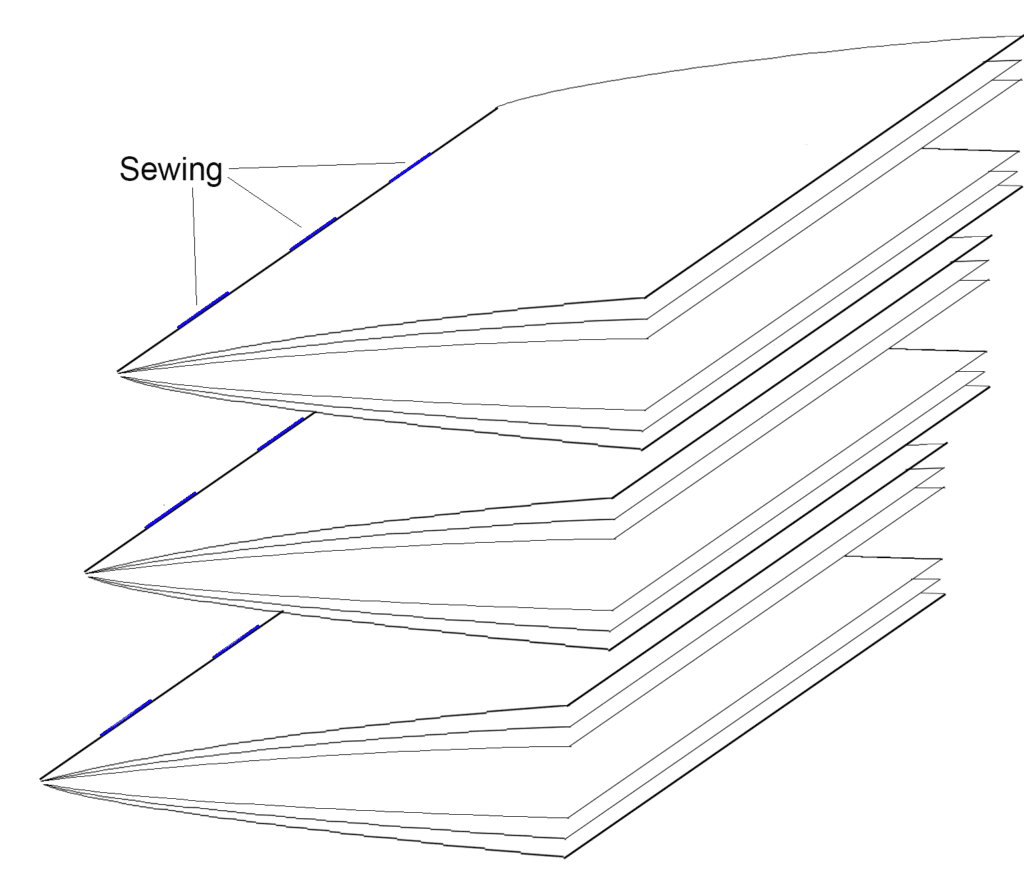
Section Sewn
Paper sheets are folded into a set of signatures. Each set is sewn individually. Signatures are then gathered together to compose block books. Due to its simplicity and efficient design, it offers long-lasting strength and durability. Therefore this kind of binding is pretty common for trade published artistic and photo books.
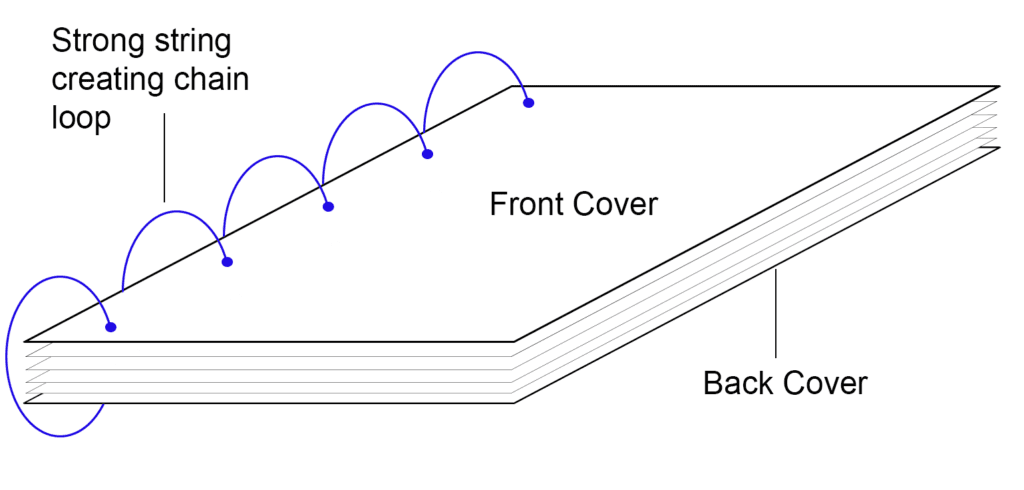
Chain bindings
Chain bindings, also called Coptic binding, is a technique in which the concept resembles a bit of the spiral binding, especially regarding the cover.
The binding is a strong wire going through the cover and through each signature.
The cover is made of 2 individual pieces (the front cover and back cover), but no spine part! That makes it visible allowing customization.
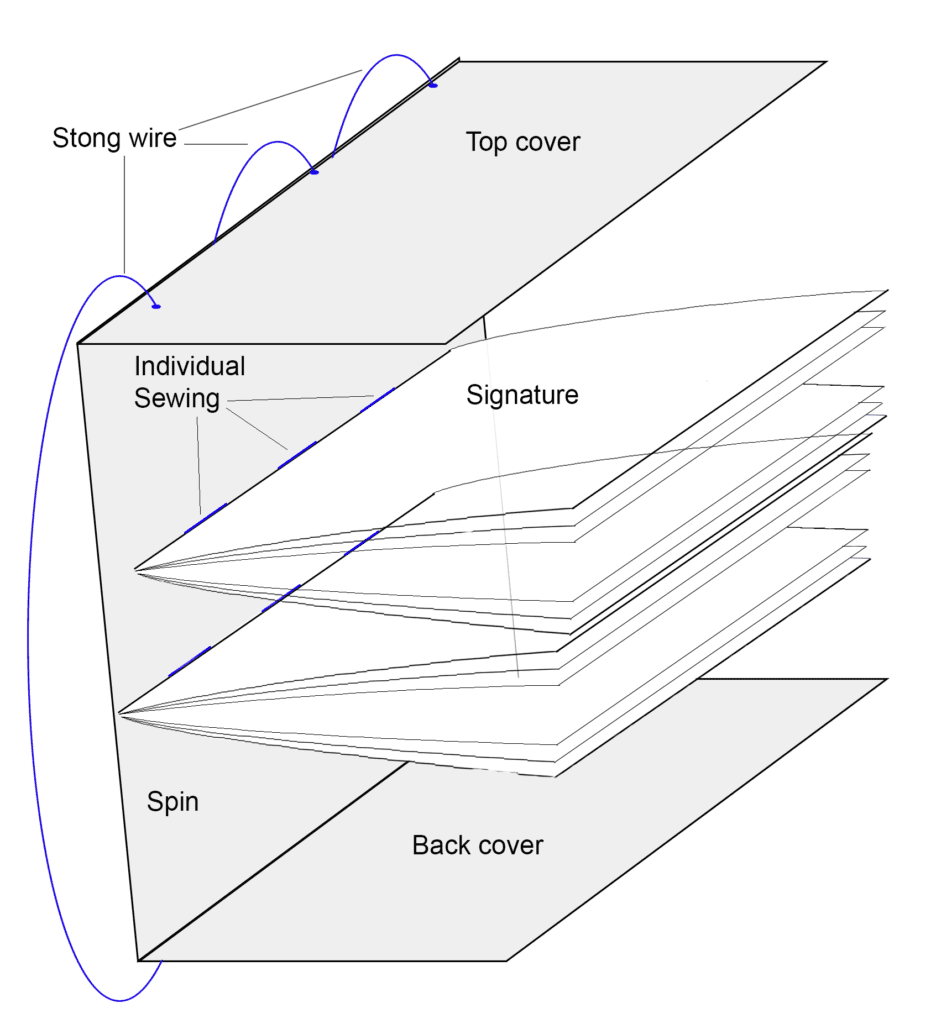
Medieval Limp Binding
This technique is the European version of the Japanese Binding.
The book block has several signatures (each one sewn individually).
One unique thread is binding together all the signatures and the covers. Patterns can be realized enhancing the beauty of the book.
Adhesive bindings
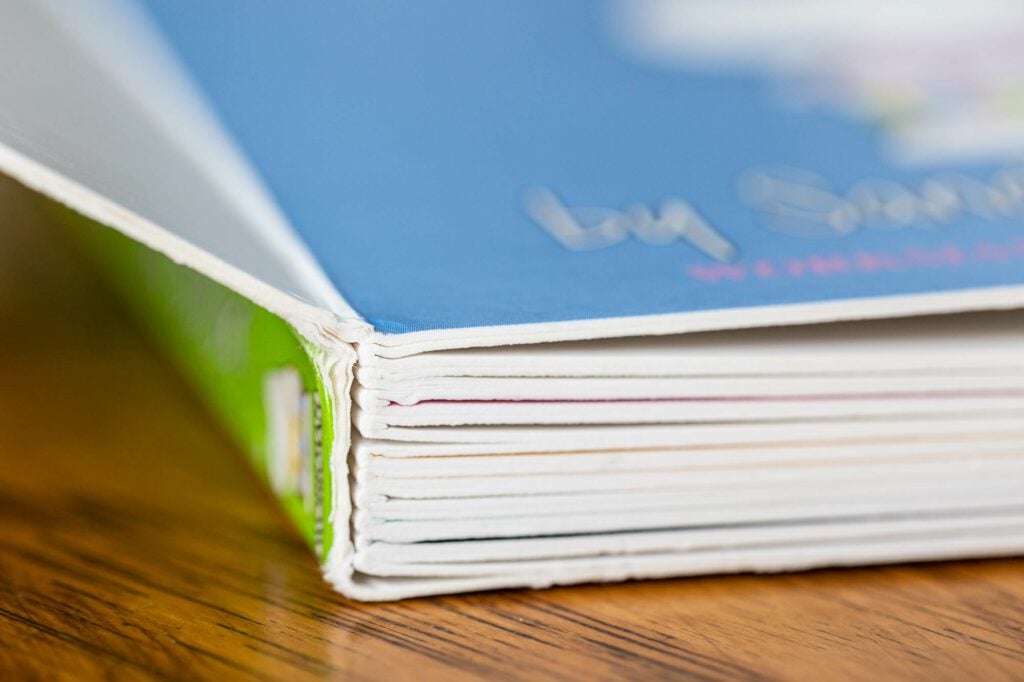
Board Binding
This type of binding is used in children’s books. Sheets are printed on thick paperboard, folded in two. Each non-printed side of the pages is then glued together one to each other. The same material is used for the cover.
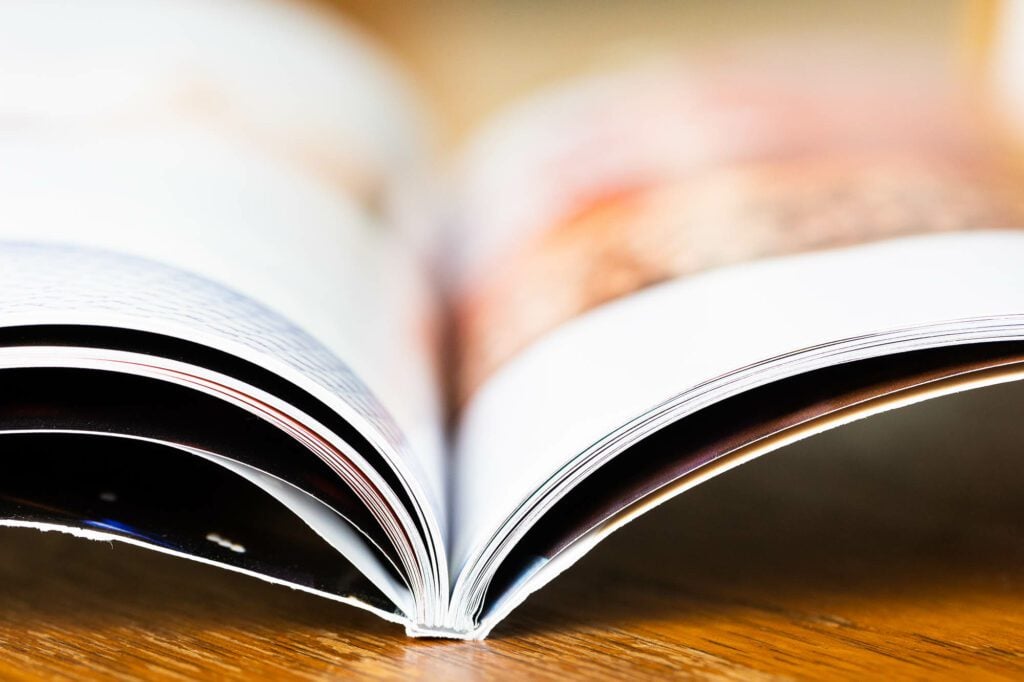
Pure Binding / Perfect Binding
Perfect for softcover books and magazines using an offset printing press. Individual pages are stacked and glued together with strong polyurethane. The name Pure Binding comes from the acronym of the polyurethane: PUR.
The cover, a soft cardboard material, is applied while the glue is still hot, allowing the spine to take a square shape. As a result of this technique, the book can’t open flat.
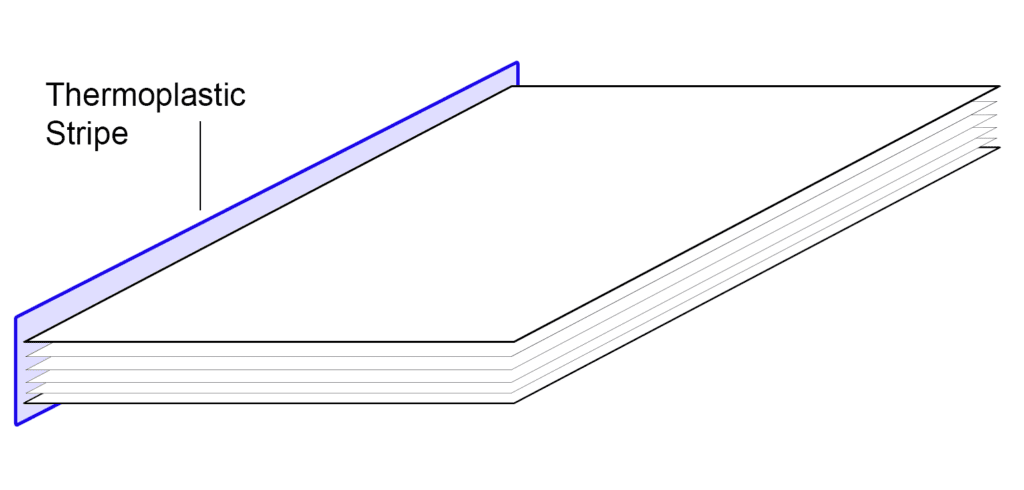
Thermal Binding
It’s a binding using a thermoplastic glue EVA (Ethylene Vinyl Acetate) strip that is melting and gluing to the signature (the spine) and the cover.
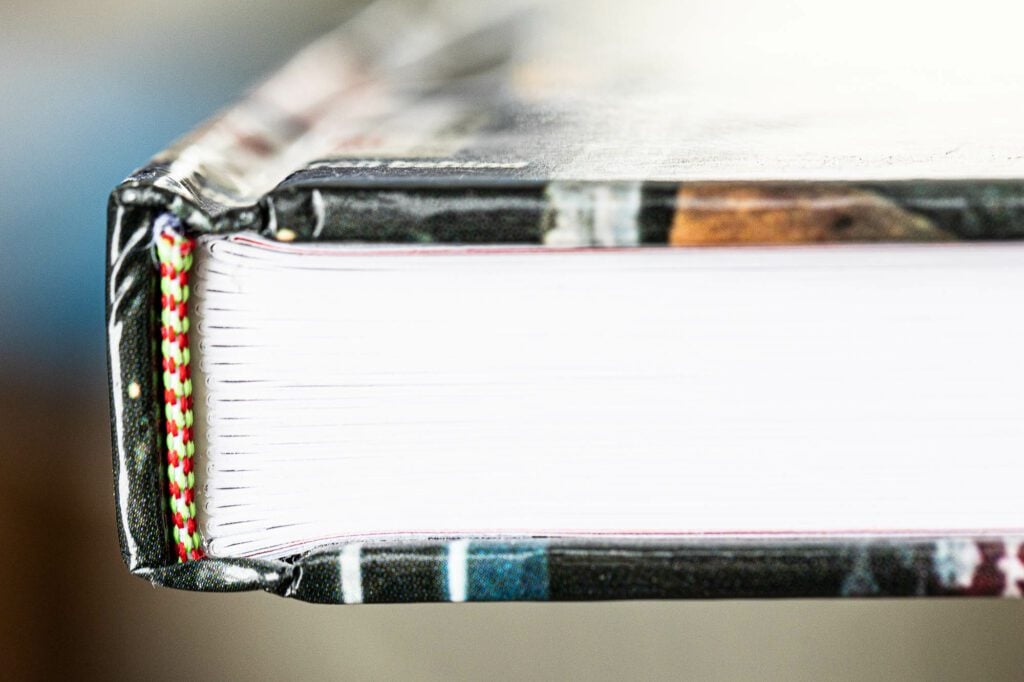
Burst Binding
This is a commonly used technique mixing two approaches: adhesive and sewing. Sets of signatures individually sewn are gathered together. Before being glued together with polyurethane, the spine part is “notched down” by a machine. This allows a stronger bite by the glue.
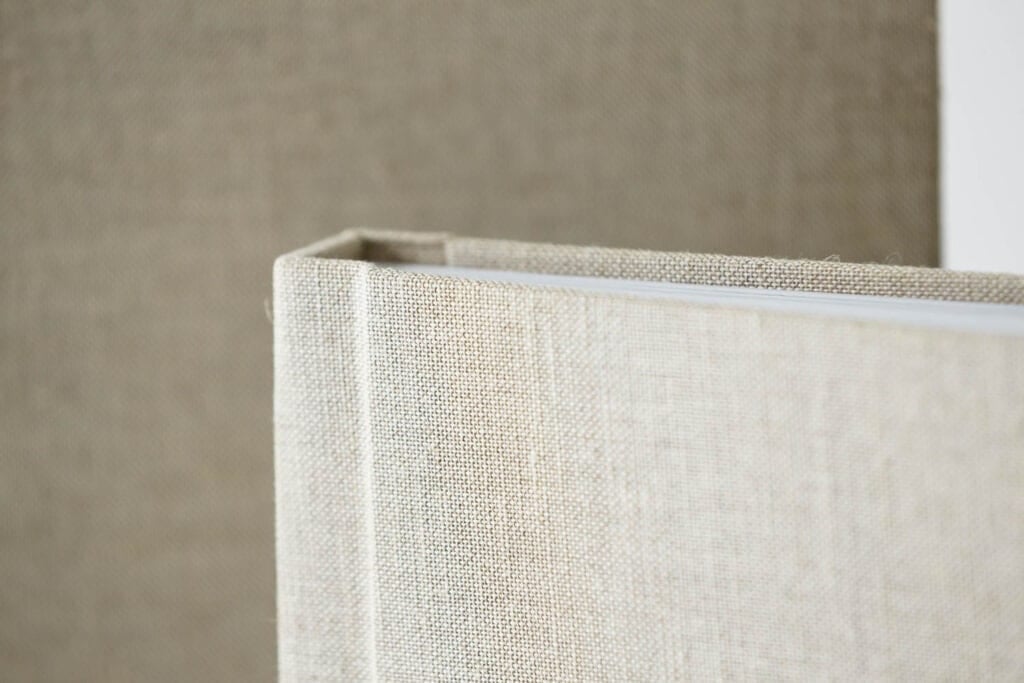
Case Binding Hardcover
Case binding is actually a blurry concept that designates the type of hardcover used. The way the book blocks are bound together is usually by perfect, burst binding or even lay-flat binding in a photo book.
A case cover is a hardcover composed of a minimum of: 1 spine and 2 greyboard cases (strong cardboard), a cloth covering.
The cloth covering is the exterior material of the cover, offering the aesthetic aspect of the book. It can be composed of linen, velvet, leather. In addition, it can be recovered with a printed acrylic layer, or embossed with gold foil, engraved with a laser.
Some Optional Parts of the Case Can Be
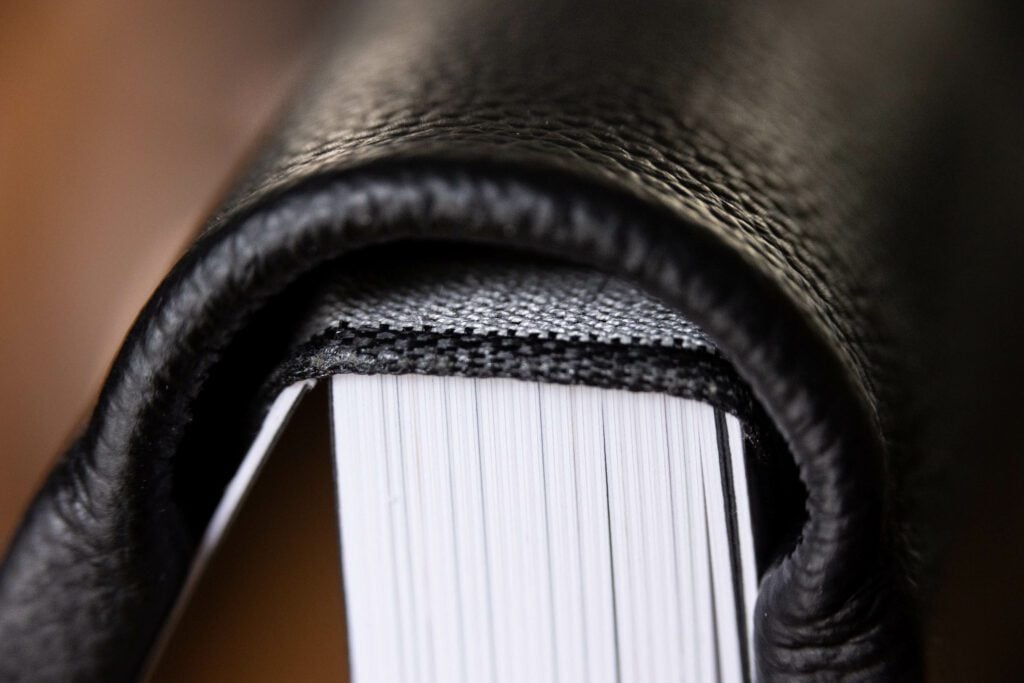
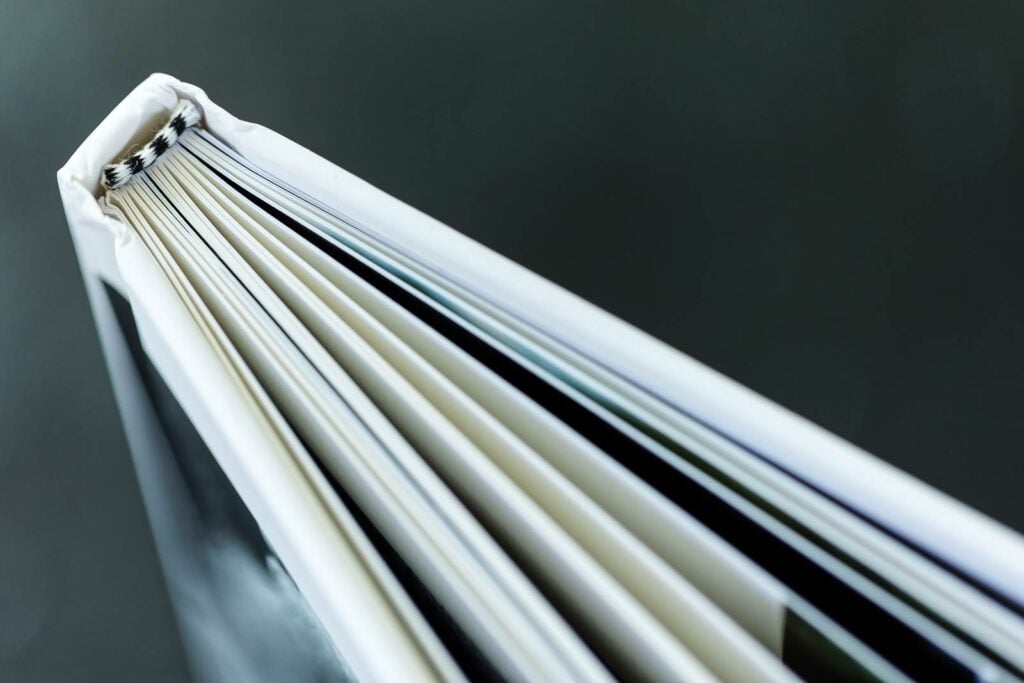
- a backing material, to bind the book signatures
- a headband and a tailband. They can be sewn through the backing material and the block book for extra strength, or just glued to enhance the visual aspect.
As explained earlier, the case is attached to the block book thanks to the endpapers glued to each part.
Lay-flat table photo book
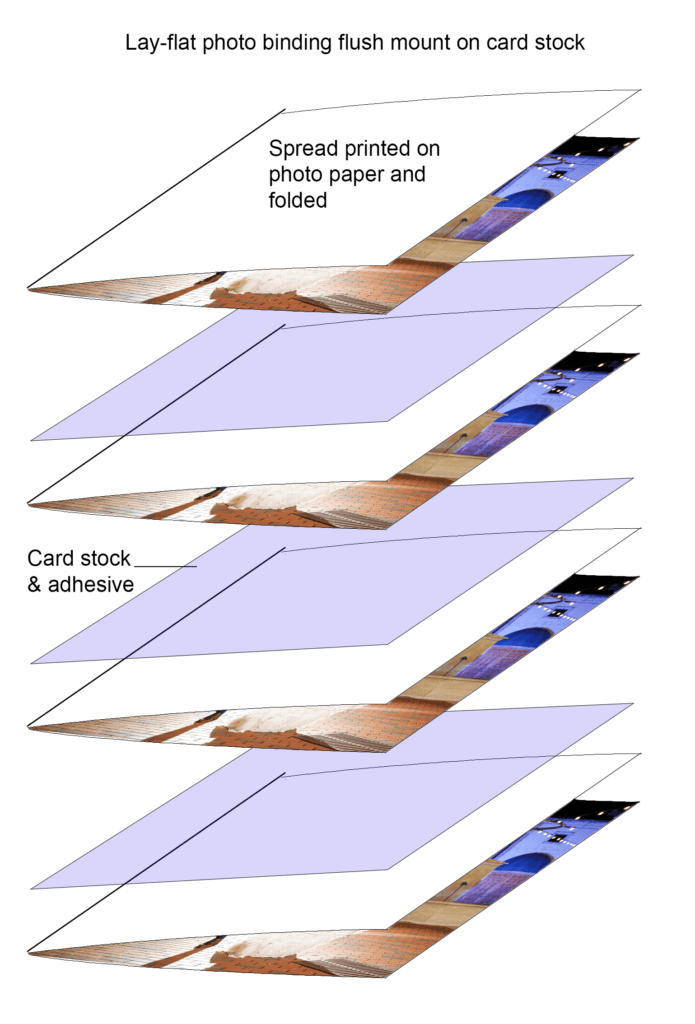
A lay-flat binding (also called flush mount) is a binding used to create photobook that can open completely flat. The image printed on one unique sheet of photo that covers both pages.
They are then stacked together, and bound with a layer of cardstock cover with adhesive (Flush Mount), or just a layer of adhesive (Not Mount).
In addition, some can use an additional thermal binding on the photo block, and a headband (for decoration).
The flat opening with no visible crease allows the image to spread on a panoramic presentation.
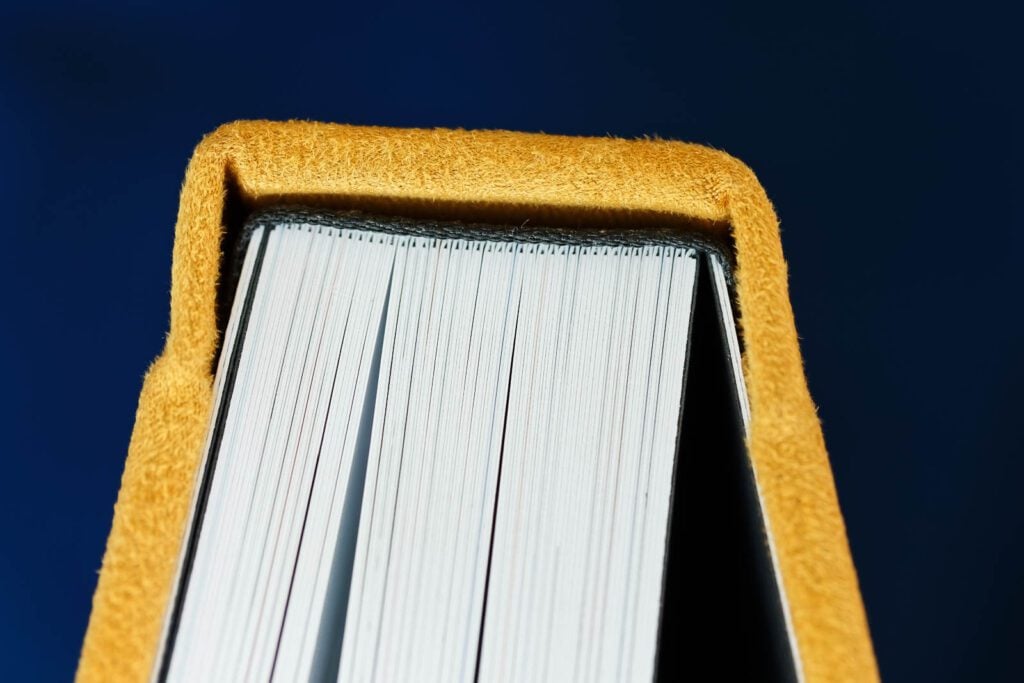
Flush Mount binding
A thin but dense cardstock is used between the pages. Not only does it create slightly thicker pages for extra strength, but also allows a better bite for the glue.
The spine of the photo block is then bound with a flexible adhesive (a strong tissue and some glue), allowing the pages to fully open flat.
The photo block is then attached to the hardcase with the strong endpapers.
This is the kind of binding used for high quality wedding photo albums.
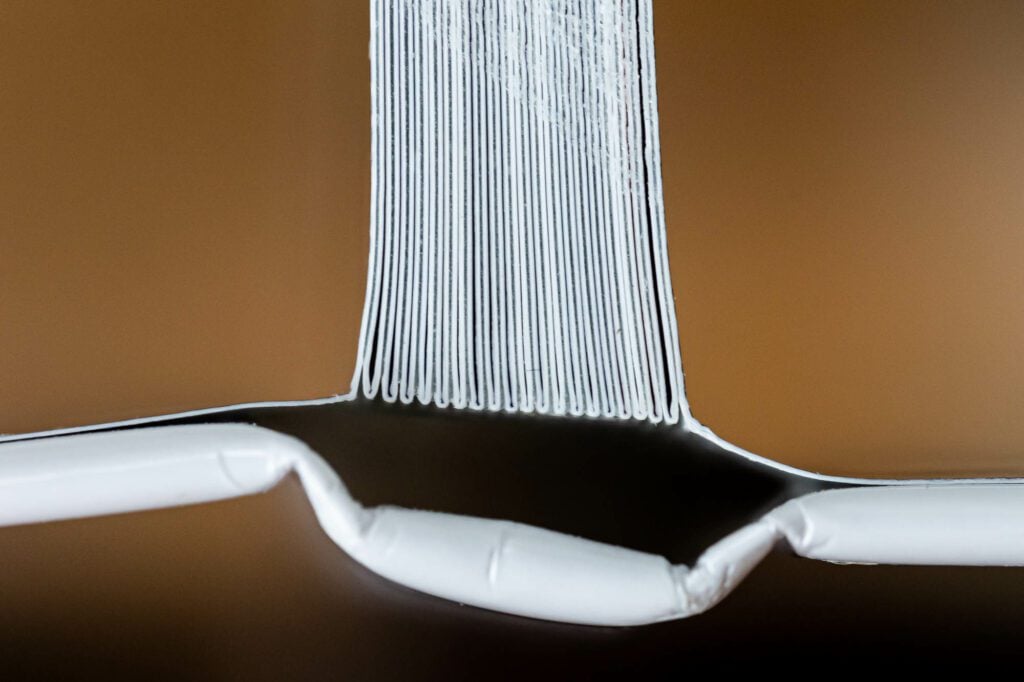
Not Mount
Each page is glued to each other (back to back) with no use of the substrate. That is usually the technology used by the internet laboratories (Shutterfly, Mpix, Mixbook etc).
Most of the time, pages of the book block (a sheet of photo paper), are used as endpapers.
Is a sewn binding or an adhesive binding better for hardcover photo books?
The perfect binding method would depend on the type of paper used and the result hoped: lay-flat or not. As we mentioned, some techniques (such as burst binding) combine both the sewing and adhesive binding.
For a photo book, sewing pages would mean having a thread running in the middle of the crease. That would go against the concept of the lay-flat album.
Can you recommend a photo book with a lay-flat binding that features premium paper and high-quality printing?
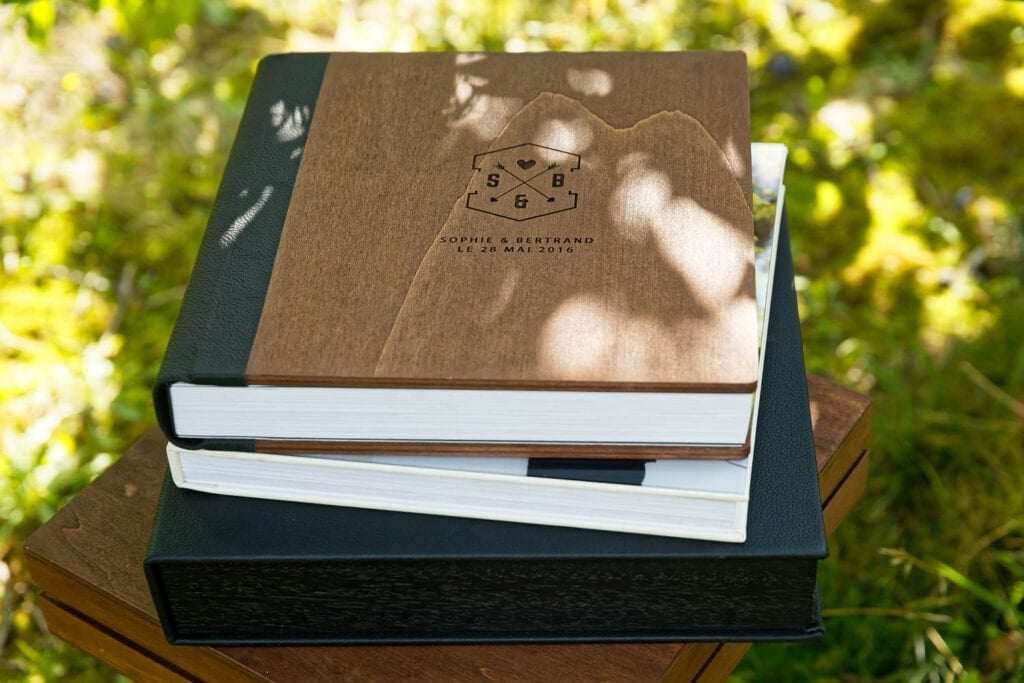
Sure, at French Touch Photography we have decided to choose the best product on the market for your photos. Thus we think that among all the options Silver Halide printing is the best for images. It offers an extremely sharp definition and an awesome range of color. Even small details would be enjoyed.
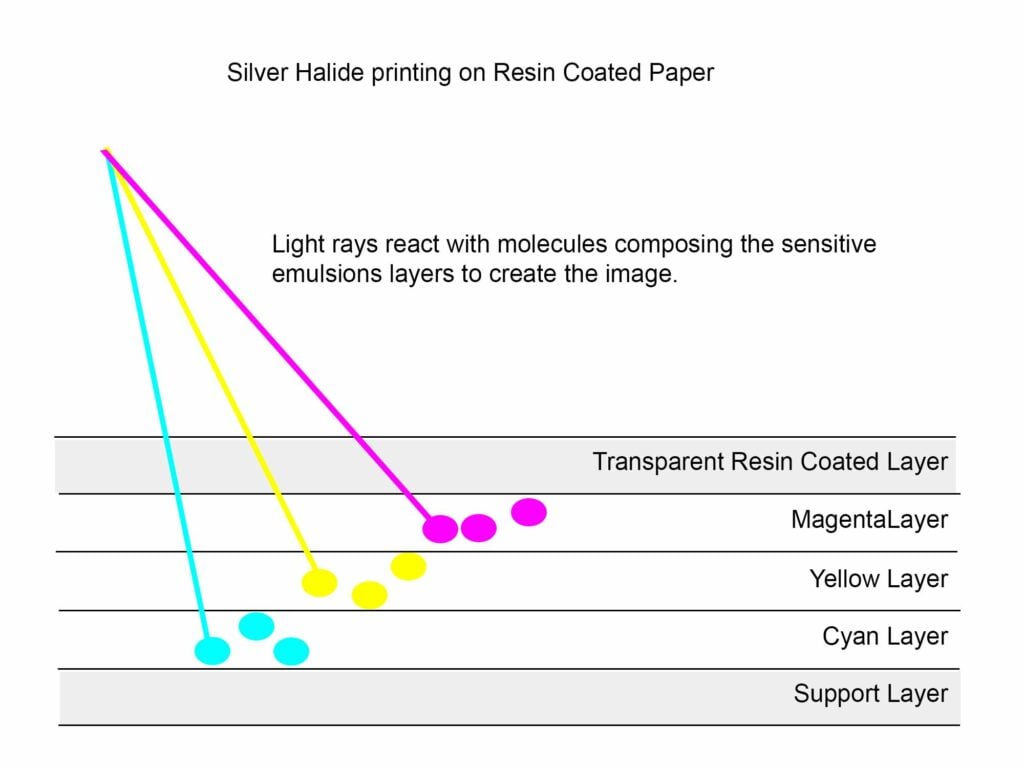
Moreover the RC paper we work with offers resistance to scratches, spills, stains, and a low level of reaction with moisture and temperature variation. We decided to avoid glossy or matte texture and to choose pearl texture (between glossy and matte).
Finally, to protect albums, we had several types of materials. Among all the options, we picked the durable one, offering leather, wood, velvet, acrylic options.